Homogeneous or heterogeneous vinyl: which one does a hospital need?
Most hospitals in Egypt use both. The real question is which floor goes in which room. This guide compares the two constructions and gives a room-by-room starting point for the specification.
How the two are made
Homogeneous vinyl is a single layer: colour and pattern run through the full thickness, usually 2 mm. Traffic wears material from the top, but the floor looks the same until it is worn through, and the surface can be restored by machine buffing. Gerflor Mipolam is a homogeneous range.
Heterogeneous vinyl is built in layers: a backing, a glass-fibre reinforcement, a printed design film and a clear wear layer with a polyurethane surface treatment. The design can be plain, wood or stone, and acoustic versions add a foam backing. Gerflor Taralay is a heterogeneous range.
Side by side
| Property | Homogeneous | Heterogeneous |
|---|---|---|
| Construction | One layer, colour through the thickness | Printed design under a clear wear layer |
| Wear | Very high: the wear layer is the full thickness | Depends on the wear-layer thickness |
| Restoration | Can be buffed and repolished | Surface treatment can be renewed; the design layer must not be worn through |
| Design | Plain and chip patterns | Plain, wood, stone and patterns |
| Acoustic versions | Rare | Common, with a foam backing |
| Typical rooms | Operating theatres, intensive care, corridors, laboratories | Wards, patient rooms, clinics, offices |
| Cost | Usually higher | Usually lower for a similar use class |
What every hospital floor needs
- Heat-welded seams, so there are no joints where dirt and water collect.
- Coved skirting that turns the floor up the wall for easy cleaning.
- Resistance to the disinfectants used on site: ask for the manufacturer’s chemical resistance table.
- A slip-resistance rating suited to each room.
- The right electrical behaviour where it matters, explained below.
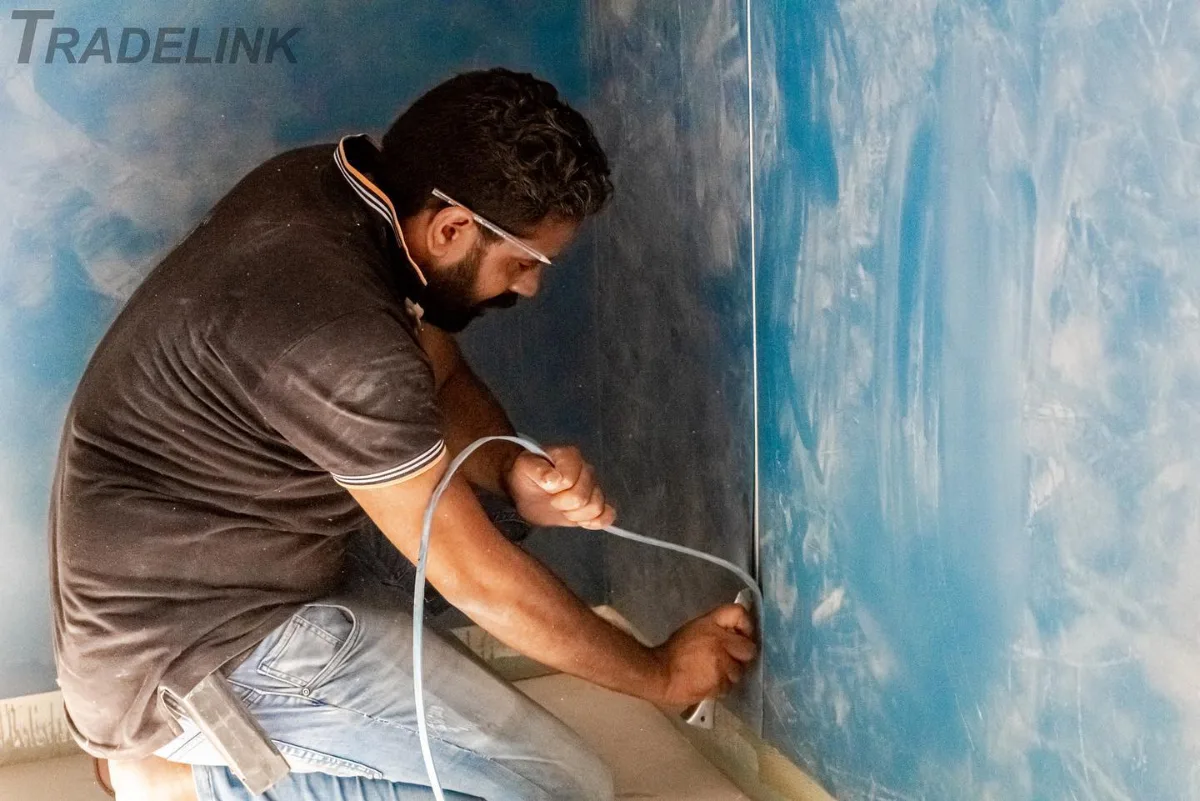
- Wall protection where beds and trolleys hit walls: corner guards, wall rails and handrails such as Gerflor SPM.
Conductive, dissipative and antistatic floors
Operating theatres, imaging rooms and rooms with sensitive electronic equipment may need a floor that controls static electricity. Conductive vinyl carries charge to earth through a copper grid laid under the adhesive. Dissipative vinyl does the same, more slowly. Antistatic vinyl limits the charge people build up when they walk. The project engineer or consultant sets the class required, and floors are tested to EN 1081. Most of these floors are homogeneous.
A room-by-room starting point
- Operating theatres and recovery: homogeneous vinyl, conductive or dissipative as specified, welded and coved.
- Intensive care and emergency: homogeneous vinyl, welded and coved.
- Corridors with bed and trolley traffic: homogeneous vinyl, or a heavy-duty heterogeneous floor of use class 34.
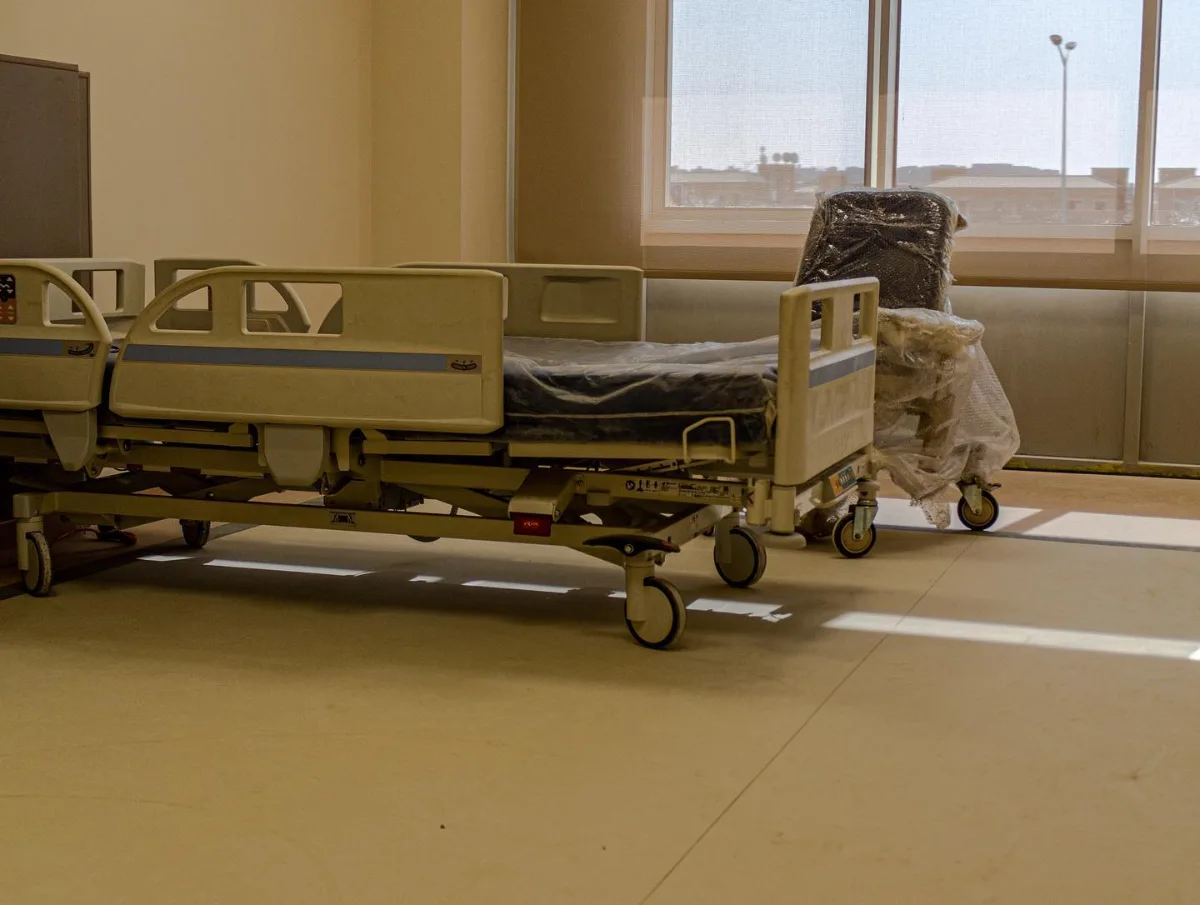
- Wards and patient rooms: heterogeneous vinyl, often an acoustic version for quieter rooms, or homogeneous.
- Laboratories and pharmacies: homogeneous vinyl with checked chemical resistance.
- Bathrooms and wet areas: slip-resistant safety vinyl with a matching wall covering.
- Offices and administration: heterogeneous vinyl or LVT.
This is a starting point, not a specification. The infection-control team, the consultant and the manufacturer’s data decide the final choice.
Hospitals that use these floors
Our reference list includes more than 140 healthcare projects in Egypt, among them the Aswan Heart Centre of the Magdi Yacoub Heart Foundation, Dar Al Fouad Hospital and the Children’s Cancer Hospital 57357, with homogeneous, heterogeneous and static-control vinyl. See the healthcare projects.
From our reference list:
- Baheya Hospital. Contractor Conserv Construction, consultant Vital Konzept. The full vinyl works.
- Sky Hospital, Cleopatra Group. Contractor Arab Contractors, consultant Al Amar Consulting Group. The full vinyl, wall cladding, handrail and corner guard works.
- Rofayda Maternity Hospital. Contractor and consultant AEO Company. Part of the vinyl, LVT, wall cladding, handrail and corner guard works.
- Salam International Hospital. Contractor and consultant Orascom Construction. The full vinyl works.
From our technical office
- Before installation, our technical office prepares shop drawings with the floor layout, dimensions and installation method, and a cut list of material sizes and quantities, so less material is wasted.
- Our own installation teams lay the floor. They are trained and certified by the manufacturers, Gerflor included.
- Material warranties run from 10 to 30 years depending on the product, and our installation warranty from 1 to 5 years.
- After handover, we offer site visits, technical follow-up and maintenance contracts.
Frequently asked questions
Can heterogeneous vinyl be used in a hospital?
Yes, in many areas: wards, patient rooms, clinics and offices. Choose a commercial use class suited to the traffic, weld the seams and cove the skirting. For operating theatres, intensive care and corridors with heavy trolley traffic, homogeneous vinyl is the usual choice.
Which one lasts longer?
For the same traffic, homogeneous vinyl usually lasts longer, because its wear layer is the full thickness and it can be restored by buffing. A heavy-duty heterogeneous floor with a thick wear layer also performs well in many hospital areas.
Do hospital floors have to be welded?
Yes. Heat-welded seams and coved skirting give a continuous surface without joints, which is easier to clean and disinfect.
What is the difference between conductive and antistatic vinyl?
Conductive vinyl drains static charge to earth through a copper grid and is used where equipment or the room demands it, such as operating theatres. Antistatic vinyl only limits the charge people build up when walking. The project engineer sets the performance required.
Related pages
